When Bekah was here in November she asked me “So, hiking the Appalachian Trail … how does that work?” Great question. I didn’t have a great answer. And since then — with Jenna and other family members asking similar questions about the hike — I have realized that, no, everybody else doesn’t already know all about the Trail.
In response to Bekah, I said something to the effect that “it’s like this: you walk all day; then you stop and eat something; then you sleep for a while; then you wake up and do it again. For 5 or 6 months.”
But, having thought about it for a couple weeks, I think I now have something closer to a great answer. It would be along the lines of this:
Hiking the Appalachian Trail — for me, anyway — involves careful planning for several months about how to take care of the real basics of life during the several months of that wake-up-walk-eat-sleep-repeat routine. The basics of food, clothing, shelter, and transportation. I’m working on them in reverse order as it turns out.
Transportation seems the easiest. It’s walking. All day every day (more or less). Until I’ve walked around 2,200 miles of Trail, plus a lot of extraneous miles from the Trail to a shelter and back, or to a post office or a grocery store, and other side trips like that.
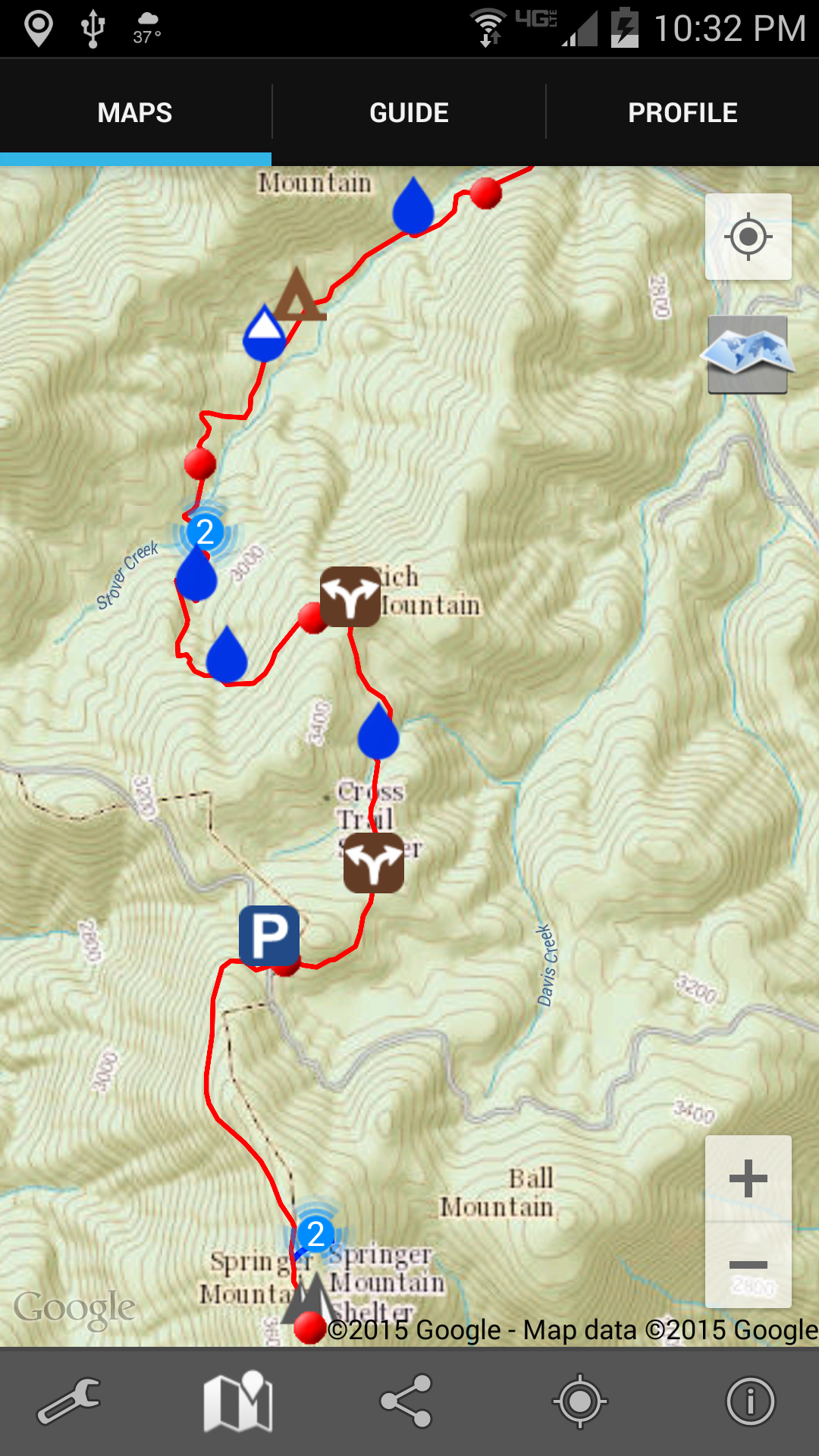
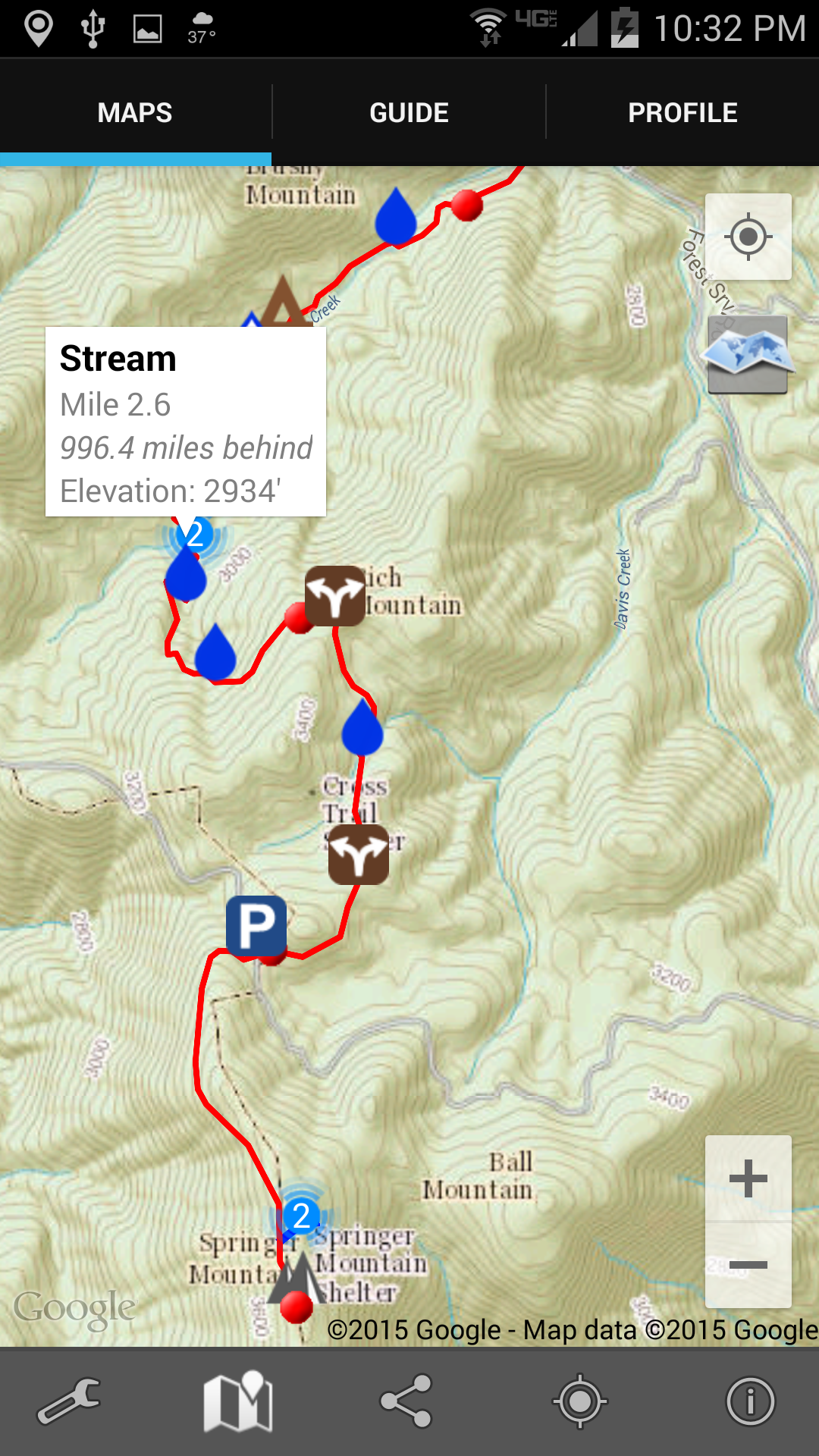
Transportation includes having decided to walk northbound (“NOBO”) from Georgia to Maine, rather than southbound (“SOBO”) or doing half of the Trail in one direction and half in the other. There are lots of detailed maps available, and several guidebooks (either for the whole Trail, or for particular parts of it). But the basic plan is to follow the white blazes that mark the Trail, show you where to turn, which fork to take when two paths diverge in the yellow woods, and so on. Two thousand miles of white paint patches, measuring 6″x2″ on trees and rocks and the occasional telephone pole in a town or wooden post in a meadow.
Transportation includes choice of footwear, too, I suppose. I haven’t narrowed things down to a particular pair of hiking shoes yet. But my plan is to be carrying a light enough load on my back that I will be able to hike in shoes and not the heavier boots I’ve worn on my earlier long distance hikes.
Shelter is a pretty easy set of decisions, too. The basic unit of shelter is usually a sleeping bag. Your choices are where you put that bag each night. There are shelters that have been constructed all along the Trail at more or less a day’s hiking distance apart. Most are a simple three-sided sort of lean-to. Some are much fancier lean-tos, with an upper floor, or skylights, or a deck, or some other feature that makes them stand out. (See elsewhere in the blog for pictures of some of the shelters I have been at before.) Probably all of them have an outhouse of some kind, as well as a spring or other water source. With a handful of exceptions the shelters are free. (And, yes, that means you regularly end up sharing space for the night with people you’ve never met before.)
Some hikers plan on sleeping in shelters most of the time. Others plan on sleeping near shelters, but in tents or hammocks or under small tarps. There are advantages to all these options. (It’s amazing just how much noise 8-12 people can make during the night what with snoring, rustling around in sleeping bags, getting up for bathroom calls, and what not. Sleeping near a shelter, rather than in it, reduces some of those drawbacks.)
My plan is to spend most nights in my hammock, but to use the shelters, too. The beauty of the hammock is that I can hang it wherever there are two trees the right distance apart; so, say I get to the shelter at 2:00 in the afternoon (which would just be too early to stop for the night, trust me). With a hammock I can keep going another few hours and stop wherever I want even if the ground’s not level enough for a tent or is rocky or wet. Just as long as I have trees.
There are also hostels along the way from time to time near where the Trail crosses a road, or perhaps in a town close to the Trail. These businesses usually provide a bunkroom, and may or may not make other amenities available — things like a shower, or laundry facilities, or meals, or an Internet connection. Naturally, hostels (and motels or bed-and-breakfasts or whatever in towns) do come at a cost.
Clothing. Ah, yes. The layered look is very much “in” on the Trail, because when you’re outdoors all day long in all sorts of weather, walking up and down mountains, you really need to be able to add warmth when you’re cold in the morning or peel off that warmth after you start sweating from the exercise or the sun.
I’m still in the midst of selecting my clothing. The thing, too, is that a backpacker wants clothes that are versatile, that work together as a system, and — maybe above all — do all that without weighing very much. You also have to deal with wearing the same clothes day after day after day. This is not the place to be if you feel you really need to be able to choose each day from amongst, say, 5 pairs of pants and 9 different shirts, several different sweaters and jackets, and a variety of matching footwear. Remember: you have to carry it all. Along with your shelter. And your food.
And food: a long distance hiker’s favorite topic. I’m figuring on being done with my clothing selection by New Year’s, and then focusing on my food for a couple months.
Overall the options for hikers are pretty open, but all boil down to finding ways to replenish the calories burned by hiking all day — while carrying your food-clothing-shelter — up and down mountains. I’ve read many places (and have no idea who did the calculation, or what it was really based on) that an Appalachian Trail thru-hiker needs something like anywhere from 3,000-6,000 calories a day to get from end to end of the Trail. Yeah, quite a range. The basic points are that it’s more than what one needs at home; and it’s (often) more than it is easy to carry.
Typical hiker trail food consists of: ramen noodles, cous-cous, or packages of Lipton noodles; maybe some beef jerky, or Slim Jims, or pepperoni, or dehydrated tuna; Snickers bars; Pop Tarts; anything with lots of carbs that — at most — requires only a small amount of boiled water to make it edible. As you probably already know or guessed, I don’t think of myself as a typical hiker on this score.
To begin with I’m a vegetarian. And for almost a year I’ve been a low carb vegetarian. Combined, these mean that most typical hiker food is off the menu.
This makes food planning more difficult and more important. Fortunately, I was able to try out a food system on a weeklong hike this summer traveling the Appalachian Trail through the length of Shenandoah National Park. I took along hard boiled eggs (two a day, and no, they don’t need to be kept in a refrigerator all the time), cheddar cheese (a quarter pound a day, and same on the refrigeration), roasted mixed nuts (a cup a day), olive oil, coconut oil, avocados, peanut butter, and one commercial dehydrated soup for dinner each night. Yes, it was heavier than a typical hiker’s food bag of 1.5 to 2 pounds of food per day. No, I probably won’t be able to buy such food along the way at every little town or gas station where hikers typically resupply. But — and I think this is key — I felt great at the end of the week. So I’m working on how to make it happen. Or deciding whether to break down and eat the carbohydrates I’ve been doing so well without.
There are towns nearby for most of the Appalachian Trail (and sometimes the Trail goes right through a town). They provide restaurants, fast food places, grocery stores, convenience stores, and post offices. All of which are food sources (well, post offices are if you have someone mail you a food box from home). These food resupply points are generally only 3-5 days apart, so it is easy for hikers to make up nutritional deficits when they hit towns, or to buy more Pop Tarts and so on at a gas station where the Trail crosses a road. Some hikers rely more on town food; some rely more on mail drops. I imagine I’ll use both, while striving to stay away from high fructose corn syrup and other processed foods or empty carbohydrates.
So that’s sort of how it works: food, clothing, shelter, and transportation. Measure (carefully), combine (wisely), stir (carefully), and serve (joyfully) with inevitable refinements along the way.
One other question I’ve been asked repeatedly: “Are you hiking alone?” The answer is, well, yes and no. I’m not planning on a hiking partner, but there are so many people hiking the Trail these days (especially near the start, before the great winnowing takes place) that it is almost certain I will be hiking at about the same pace as several other people and see them throughout the day or in the evening. So, yes, I will not be within talking distance of anyone most of the day; but I will almost always be around people at the shelters, and often they will be people I’ve met before on the Trail. (Just for example, on this past summer’s hike through the Shenandoah there was a guy from England at the same shelter I was at 5 of the 7 nights we were out.)
 Pathology: the Study of a Path