Ticking Clock

The clock is ticking on this pilgrimage as it winds down. I’m writing from a campground in Melvich on Wednesday. And, God willing (everything is God willing), I will walk into John O’Groats on Saturday morning.

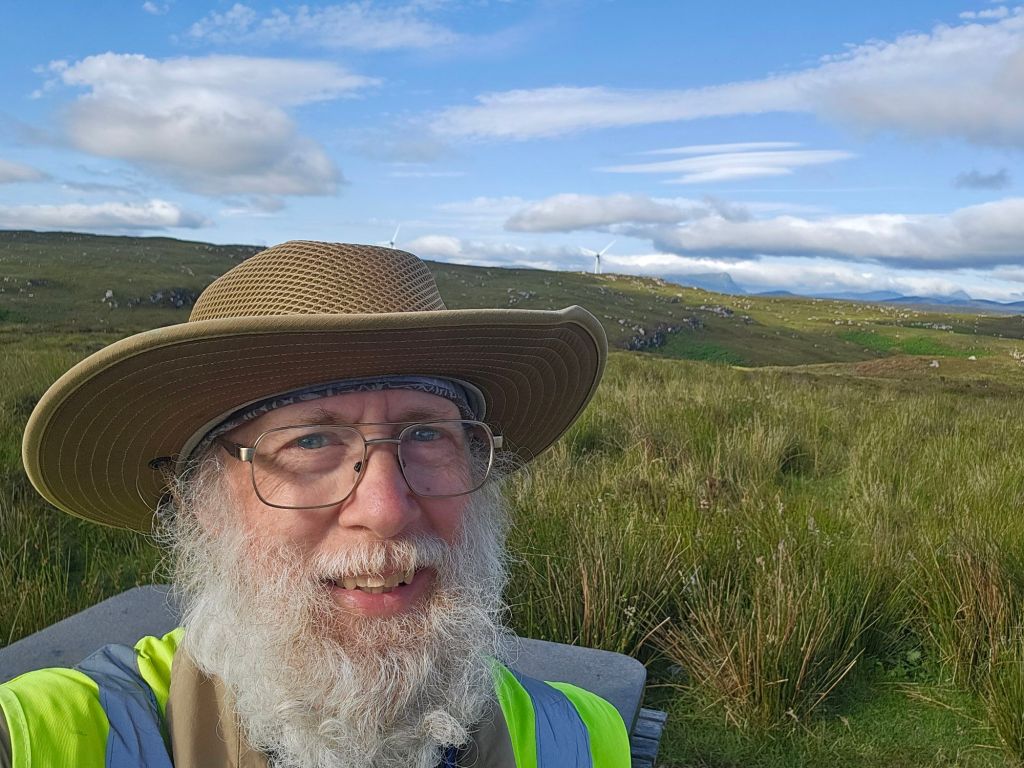
The Scottish Highlands near Bettyhill

So many of my thoughts have been turning to some sort of summary, or gathering together of loose threads, or working out what I have learned from this 1,000 mile walk the length of the United Kingdom.

Read more

Meister Eckhart’s apophatic way

"The ‘way’ Eckhart proposes, so far as he does so at all, follows the apophatic route of classical Christian contemplation favoured in the Order of Preachers during his formative years and as taught by his close contemporary St Gregory of Palamas in the East and practitioners of the via negativa in the West such as Richard of St Victor. What Eckhart in fact teaches is that the silent repose of contemplation, the polar opposite of ecstatic rapture, is the ‘place of rest’ where one encounters the divine Presence in the ground of the soul.

“The elements of spirituality Eckhart would have learned as a young friar are reflected in this passage from the Summa Theologiae of St Thomas Aquinas, which Eckhart would have known well: ‘Contemplation is the soul’s clear and free dwelling on the object of its gaze; meditation is the survey of the mind while occupied in searching for the truth; and cogitation is the mind’s glance, which is prone to wander.”

Woods, Richard. Meister Eckhart: Master of Mystics. New York: Continuum, 2011, p. 100

experience

"Now the great obstacle to mutual understanding between Christianity and Buddhism lies in the Western tendency to focus not on the Buddhist experience, which is essential, but on the explanation, which is accidental and which indeed Zen often regards as completely trivial and even misleading.

“Buddhist meditation, but above all that of Zen, seeks not to explain but to pay attention, to become aware, to be mindful, in other words to develop a certain kind of consciousness that is above and beyond deception by verbal formulas–or by emotional excitement.”

Merton, Thomas. “A Christian Looks at Zen.” (1967) in Selected Essays. Edited with an introduction by Patrick F. O’Connell. Maryknoll, NY: Orbis Books, 2013, p. 346.

divine presence

“Since the reigning presence of God is within us, any approach to exploring the mystical life will naturally include exercises and practices such as meditation and contemplation, intended to help us become more open to the hidden (mystical) presence of God within. As worthy as such practices are by themselves they are incomplete. Our journey to divine union also needs to be nourished by participation in some sort of community of fellow seekers who are trying, as best they can, to figure out what living and following Jesus is all about.”

McColman, Carl. The New Big Book of Christian Mysticism: an Essential Guide to Contemplative Spirituality. Minneapolis: Broadleaf Books, 2023, p. 203.

presence of God

“God is everywhere. The purpose of meditation and prayer is to become aware of that presence and live in relationship with God. It is not so much that ‘God fills us,’ even though scripture uses that language to describe it from our perspective. God is already here. We simply enter into a relationship by being in the Presence of the One who Is.”

Talbot, John Michael. The World is My Cloister: Living From the Hermit Within. Maryknoll, NY: Orbis Books, 2010, page 107.

presence of God

“God is everywhere. The purpose of meditation and prayer is to become aware of that presence and live in relationship with God. It is not so much that ‘God fills us,’ even though scripture uses that language to describe it from our perspective. God is already here. We simply enter into a relationship by being in the Presence of the One who Is.”

Talbot, John Michael. The World is My Cloister: Living From the Hermit Within. Maryknoll, NY: Orbis Books, 2010, page 107.

the mind’s place in prayer

“As I have said before, I do not want anyone to feel bound by my words or thoughts. I only want to offer an example for those who may wish to follow it; let anyone improve it who is able to do so and let him meditate either upon all commandments at one time or on as many as he may desire. For the mind, once it is seriously occupied with a matter, be it good or evil, can ponder more in one moment than the tongue can recite in ten hours or the pen write in ten days. There is something quick, subtle, and mighty about the mind and soul.”

Luther, Martin. “A Simple Way to Pray” (1535) Luther’s Works Vol. 43. Philadelphia: Fortress Press, 1969, page 207.


comment: Luther on meditation, strongly advocating it, clearly declaring its benefits. And NOT wanting people to feel bound by his words, he basically says ‘this is the way I pray, but you should pray however works for you.’ I find his words here refreshing.

Pope Paul VI on silence

Quoting Paul VI in his homily in Nazareth on 5 January 1964: “The silence of Nazareth should teach us how to meditate in peace and quiet, to reflect on the deeply spiritual, and to be open to the voice of God’s inner wisdom and the counsel of true teachers. Nazareth can teach us the value of study and preparation, of meditation, of a well-ordered personal spiritual life, and of silent prayer that is known only to God.”

Sarah, Robert Cardinal with Nicolas Diat. The Power of Silence Against the Dictatorship of Noise. Translated by Michael J. Miller. San Francisco: Ignatius Press, 2017. Thought 209. (p. 110)

meditate like ants and bees

"In the Christian monastic tradition, meditatio is not primarily a technique for emptying the soul. Meditation is an exercise in attentiveness, purification, and concentration, but its primary goal is the fullness or maturation of God’s Word within us. According to the most ancient tradition, meditation is biblical. And in lectio divina, three important ‘moments’ constitute meditatio: the ant’s work, the bee’s work, and discernment.

"The ant’s work is to harvest the food. Our food is God’s Word. … One who is more familiar with Scripture will have the advantage of recalling a greater number of texts.

"We must not only harvest our food, but also work with it like a bee. … In other words, the monk’s work is to meditate, i.e., to reveal the hidden sense of Scripture, to produce the honey of evangelical wisdom. Monastic tradition calls this second step of meditation ruminatio. …

“God’s Word entering our lives begins a work of discernment, of purification, of krisis–transformation and conversion. Whereas with lectio we read Scripture, during meditatio God’s Word ‘reads’ us. This can prove a painful process.”

Barban, Alessandro. “Lectio Divina and Monastic Theology in Camaldolese Life” in Belisle, Peter-Damian, editor. The Privilege of Love: Camaldolese Benedictine Spirituality. Collegeville, Minn.: Liturgical Press, 2002, pp. 56-57.
meditative prayer

“In meditative prayer, one thinks and speaks not only with his mind and lips, but in a certain sense with his whole being. Prayer is then not just a formula of words, or a series of desires springing up in the heart–it is the orientation of our whole body, mind and spirit to God in silence, attention, and adoration. All good meditative prayer is a conversion of our entire self to God.”

Merton, Thomas. Thoughts in Solitude. NY: Farrar, Straus and Giroux, 1958. (pbk ed 1999), p. 40.


This is how we can finally get away from the Sears-catalog-Amazon-wish-list type of prayer that so many Christians are boxed in by.