Ticking Clock

The clock is ticking on this pilgrimage as it winds down. I’m writing from a campground in Melvich on Wednesday. And, God willing (everything is God willing), I will walk into John O’Groats on Saturday morning.
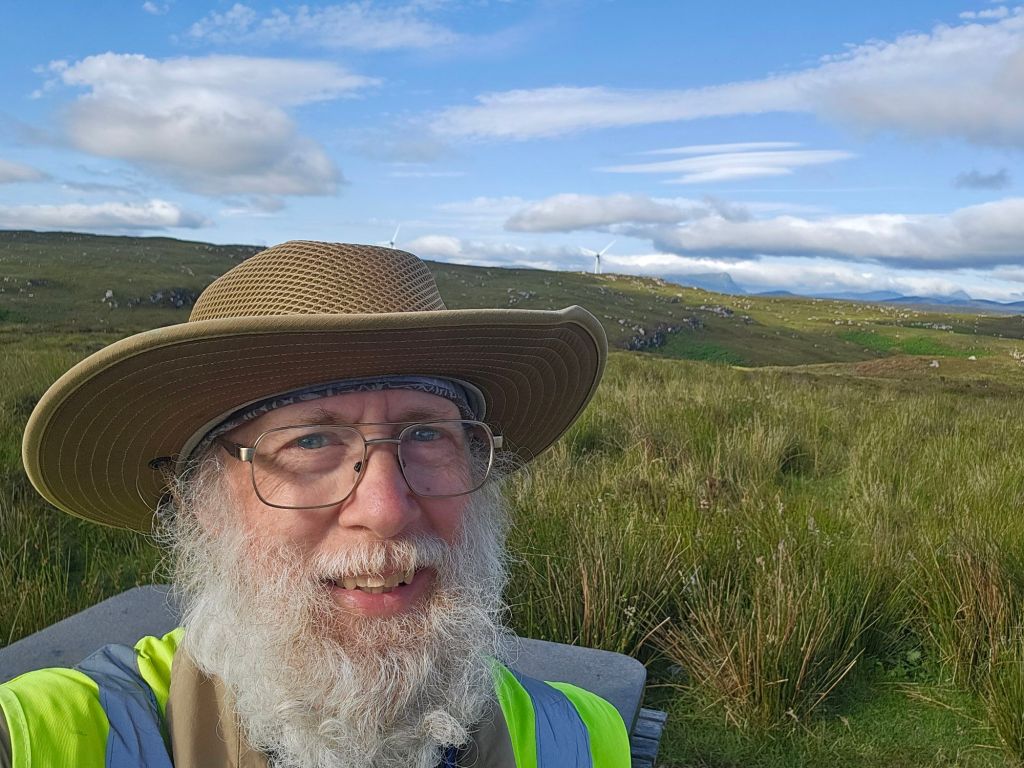
The Scottish Highlands near Bettyhill

So many of my thoughts have been turning to some sort of summary, or gathering together of loose threads, or working out what I have learned from this 1,000 mile walk the length of the United Kingdom.

Read more

LEJOG overview map

I have lifted this map from the inside front cover of Cycling Land’s End to John O’Groats: LEJOG end-to-end on quiet roads and traffic-free paths by Richard Barrett. 3rd edition. Kendal, Cumbria : Cicerone, ©2021. It shows pretty much the route I’m planning on walking northbound, except for the two diversions I’ve already mentioned: the Offa’s Dyke Path, and the Annandale Way.

Read more

LEJOG as pilgrimage

Okay, fine, the last posts explain what a LEJOG is, but why do it?

A goodly number of the people do this trek to raise funds for a charity. Those are the people who post and boost videos during their trip. LEJOGers who aren’t trying to reach more potential donors don’t have the same need to publicize their efforts. But there are other reasons to walk 1,000 miles.

Read more

LEJOG Routes

Here’s the deal with planning your own LEJOG: after deciding that you’d like to try it, you need to figure out a route between the two ends. That’s right! Unlike the Appalachian Trail, this major trek is not blazed end-to-end. There isn’t one single “official” pathway. The whole ‘how do you get from here to there’ part is up to each individual trekker.

Read more

two types of pilgrimage

“The pilgrimage idea, the outgoing quest, appears in mystical literature under two rather different aspects. One is the search for ‘the Hidden Treasure which desires to be found.’ Such is the ‘quest of the Grail’ when regarded in its mystic aspect as an allegory of the adventure of the soul. The other is the long, hard journey towards a known and definite goal or state. Such is Dante’s ‘Divine Comedy’; which is, in one of its aspects, a faithful and detailed description of the Mystic Way.” (Evelyn Underhill, Mysticism. New York: E.P. Dutton, 1912, p. 154)

different burdens for different people

“Since it is generally true of Christians that few are strong and many are weak, one simply cannot place the same burden on everyone. … When a strong man travels with a weak man, he must restrain himself so as not to walk at a speed proportionate to his strength lest he set a killing pace for his weak companion.”

Luther, Martin. “Whether One May Flee From a Deadly Plague” (1527) Luther’s Works Vol. 43. Philadelphia: Fortress Press, 1969, page 120.


Comment: It is an act of discernment and wisdom to realize the need for variety in practice or requirements because different people have different levels of tolerance. There should, of course, be measures taken to promote growth and build spiritual strength, but when everyone is starting from a different place the means for growth and strength have to be different.