One thing about this trip, that I think I’ve mentioned before, is that there is no set path to follow. Everyone who does this LEJOG – Land’s End to John O’Groats – does it their own way.
I’ve mostly been following a bicycle route published by Richard Barrett in order to walk mostly on roads, lanes, bike paths, rail trails, and canal towpaths. But I also walked most of the Offa’s Dyke Path along the border between the countries of England and Wales, parts of which reminded me of the Appalachian Trail.
Following the bike route has the genius of mostly relieving me of figuring how to get where I’m going. I just follow the track in the app on my phone. But it doesn’t get me out of having to guess where I can stay each night. This isn’t the Appalachian Trail with its shelters and campsites so conveniently placed along its entire 2,000+ miles.
So far, I have stayed at one motel, and a couple of B&Bs. The expense of those means I save them for when I really need to clean up and take a day off. Usually, I camp out.
Camping in England often means finding a commercial campsite and renting some of its lawn for the night, in between the caravans, motor homes, and car campers. So far that’s been no big deal, but as summer looms, these places will get more crowded.
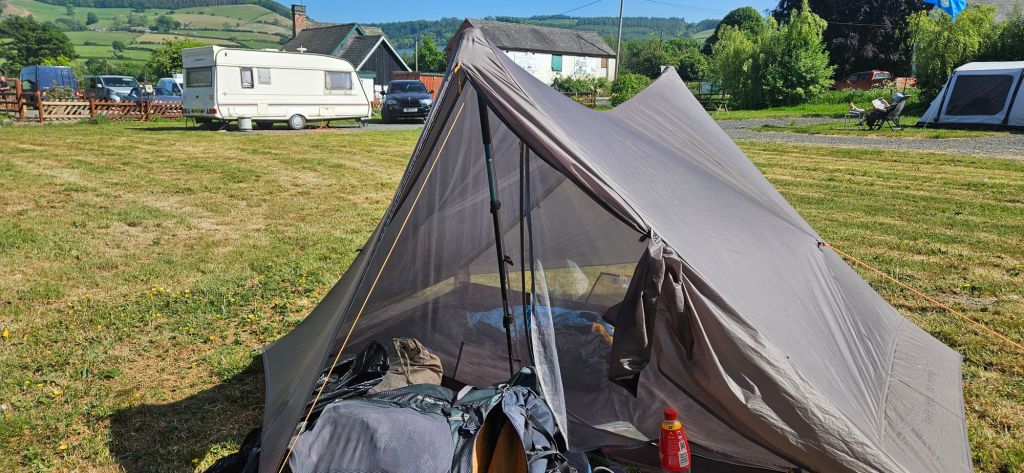
So I’m also doing wild camping. In the US, we call it stealth camping. It’s camping in someone else’s property, leaving no trace of being there, and vanishing down the trail before anyone notices. The wild camping mantra is “Pitch late, leave early.” As the days have been getting shorter and shorter while I’ve been here, that had meant fewer and fewer hours of darkness. (I’m writing this on 3 June when sunrise was at 4:42 am and sunset will be at 9:33 pm.) It stays to get light an hour before sunrise, and the light lingers an hour aftet sunset.
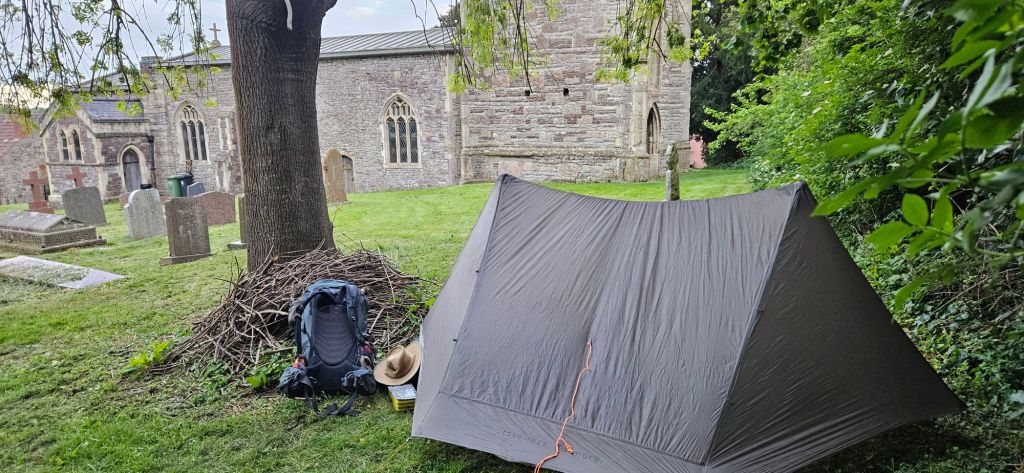
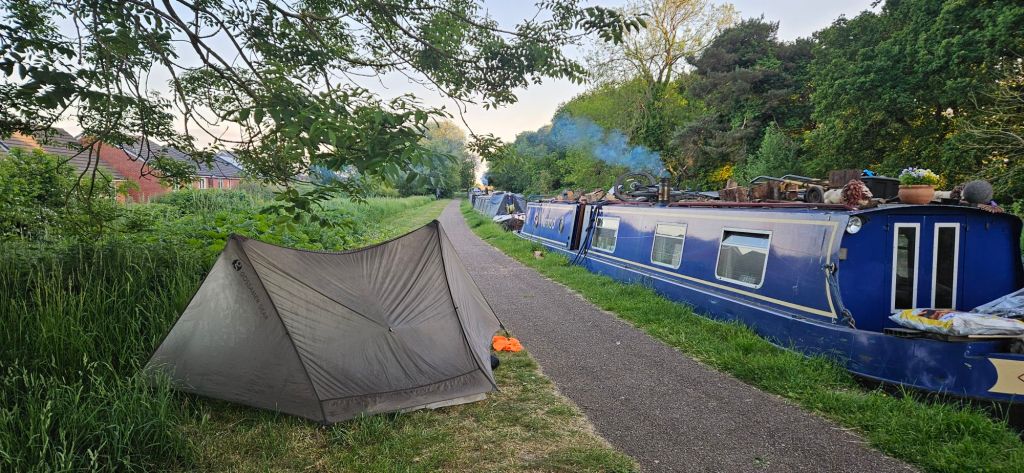
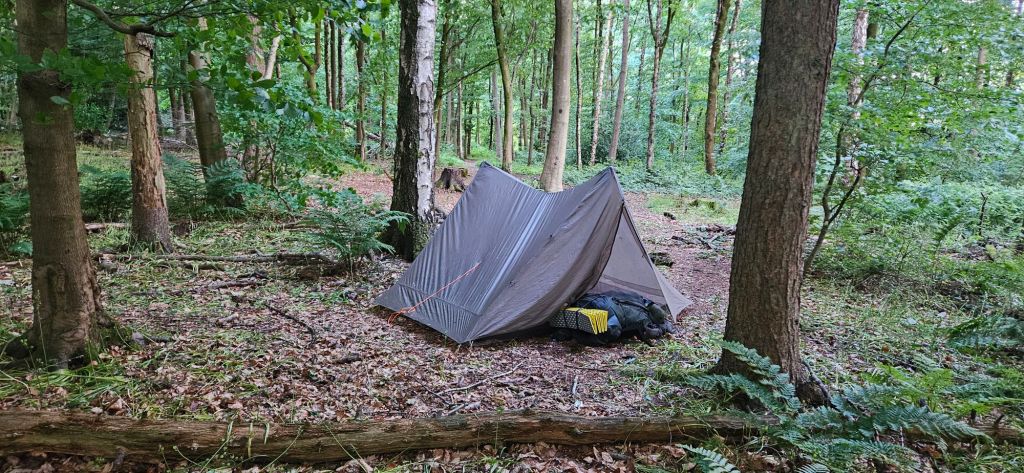
I have wild camped (sometimes with permission, sometimes without) in a neglected corner of a farmer’s field; behind a historic mill run by the National Trust; between a tree and a stone wall in a church cemetery; next to the chimney remains of an old mine in what is now a wildlife preserve; along a canal towpath; in the woods at a far corner of a “country park”; in a fenced village green space between a small stream and a sheep meadow; several times in the porch at the south side of rural churches; and so on. Pretty much every night is different.
I’m writing this in England, about a week before I plan to cross into Scotland. The laws are different in Scotland. One can camp almost wherever one wants. Mostly you just be polite about where you pitch your tent, don’t leave anything behind, and leave the next day. This should make planning where to spend the night simpler. But it still won’t be the Appalachian Trail’s shelter system.
It also won’t be the Appalachian Trail’s crowds.
 Pathology: the Study of a Path