“Therefore let us move beyond the elementary teachings about Christ and be taken forward to maturity, not laying again the foundation of repentance from acts that lead to death, and of faith in God”
Hebrews 6:1 (NIV)
The central idea here seems to be that there are, if you will, “ages and stages” in the Christian life. There are elementary teachings, and then there is maturity. There’s a foundation, and there is what is built on the foundation.
But let’s look for a moment at the space in between those two stages. Let’s look, that is, at what happens between the two. How do we get from the one place to the other place?
Pilgrims can feel the answer in their bones and on the soles of their feet: movement.
The New International Version of the verse from Hebrews has “let us move” and “let us … be taken forward.” An active verb and a passive verb. Other English translations have “leaving … let us go on”; “leaving … let us press on”; “let’s press on … by moving on”; “let us go on … let us not go back”; “we must progress … and move on”; “so let’s push on … and move beyond.” There’s an urgency about this growth and change.
We pilgrims feel that shift, too, during our time of travel. Maybe the clock is running out on our visa and we sense there may not be enough days left to reach our goal. Or perhaps the seasons are changing and we know our clothing is not a good match for the weather to come. And, again, it could just be that as “the end is in sight” we speed our steps and lengthen our days to get to our goal.
All these point to there being differences in our pilgrimage at different times in the experience. Let me suggest that this is also true in the Christian spiritual life apart from pilgrimage.
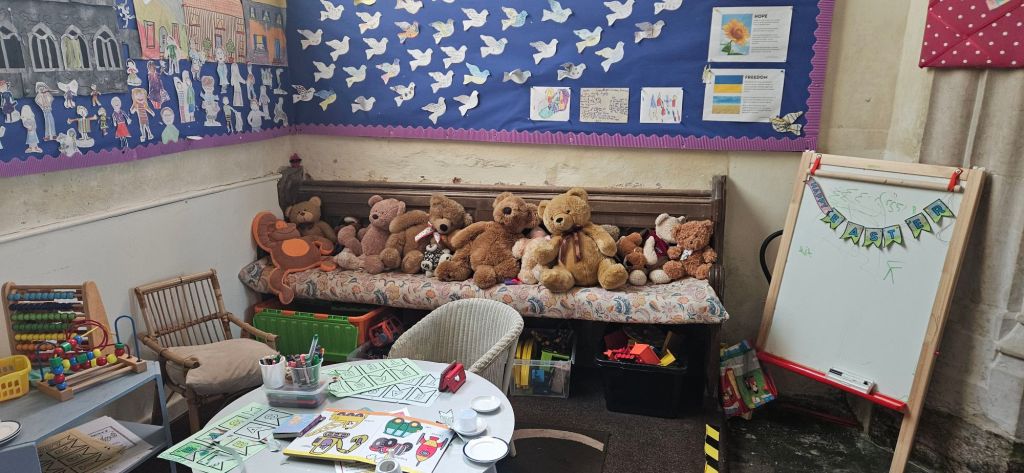
For example, many congregations or parishes have Sunday School lessons for young children, even for pre-schoolers. It just wouldn’t work to make the same leaflets and crayons a steady diet for the adults. And apart from needing age-appropriate educational materials, there are also different methods and materials for people that are more or less appropriate based on their ‘spiritual ages.’ The difficulty is that senior citizens can be newborn babes in Christ, and teenagers can be quite spiritually mature.
You probably did not step out on your first pilgrimage the weekend after you were baptized, but eventually it was something you really wanted to do. You grew into it. And your prayers should be growing beyond what they were years ago. Your participation in the Sacrament of the Altar should be developing past what it was at your first communion. Your Bible study should be deeper (and maybe slower) than it was in the past. You will probably be taking on spiritual disciplines that you couldn’t imagine shouldering in your younger days, or maybe had never heard of.
Maybe you can think today about how your movement and growth on the pilgrimage trail is a physical embodiment of movement and growth in your spiritual life. Think about how the external reflects the internal. And then maybe pray about what spiritual work you might be willing to take on internally after your pilgrimage.
And, yes of course, if you are not at the moment walking a physical pilgrimage, you can still take on growth challenges.
 Pathology: the Study of a Path