Back in George Washington’s day and before, the frontier (from a English colonial perspective) was more or less along the Appalachian ridges that I am walking. The French claimed the other side of that line, having come down from Canada in search of furs — which led, eventually, to Washington’s earliest military excursions. But nobody really told the native Americans that they were suddenly living in the “wrong” places and that they ought to move along elsewhere. Or maybe nearly everyone told them. In any event, they became “hostile” (as you likely would). And at times the woods were filled with hostiles — native, French, English … eventually also Union and Confederate in much of the land I’ve recently been hiking through. Today, not so much.
Today, parts of the area through which the Trail runs are filled with “hostels.” [See what I did there?] These hostels are businesses catering mostly to the hiking crowd, providing at least a clean, dry, indoor bed to tired wanderers. The beds are usually dormitory-style bunk beds, several to a room. Other amenities can include showers, laundry, meals, food to take along, fuel, and rides into nearby towns. All for a price, of course, but generally way less than one would pay for a motel room in town. Hostel costs range from “donation requested” to maybe $30 for a bed, shower, and laundry.
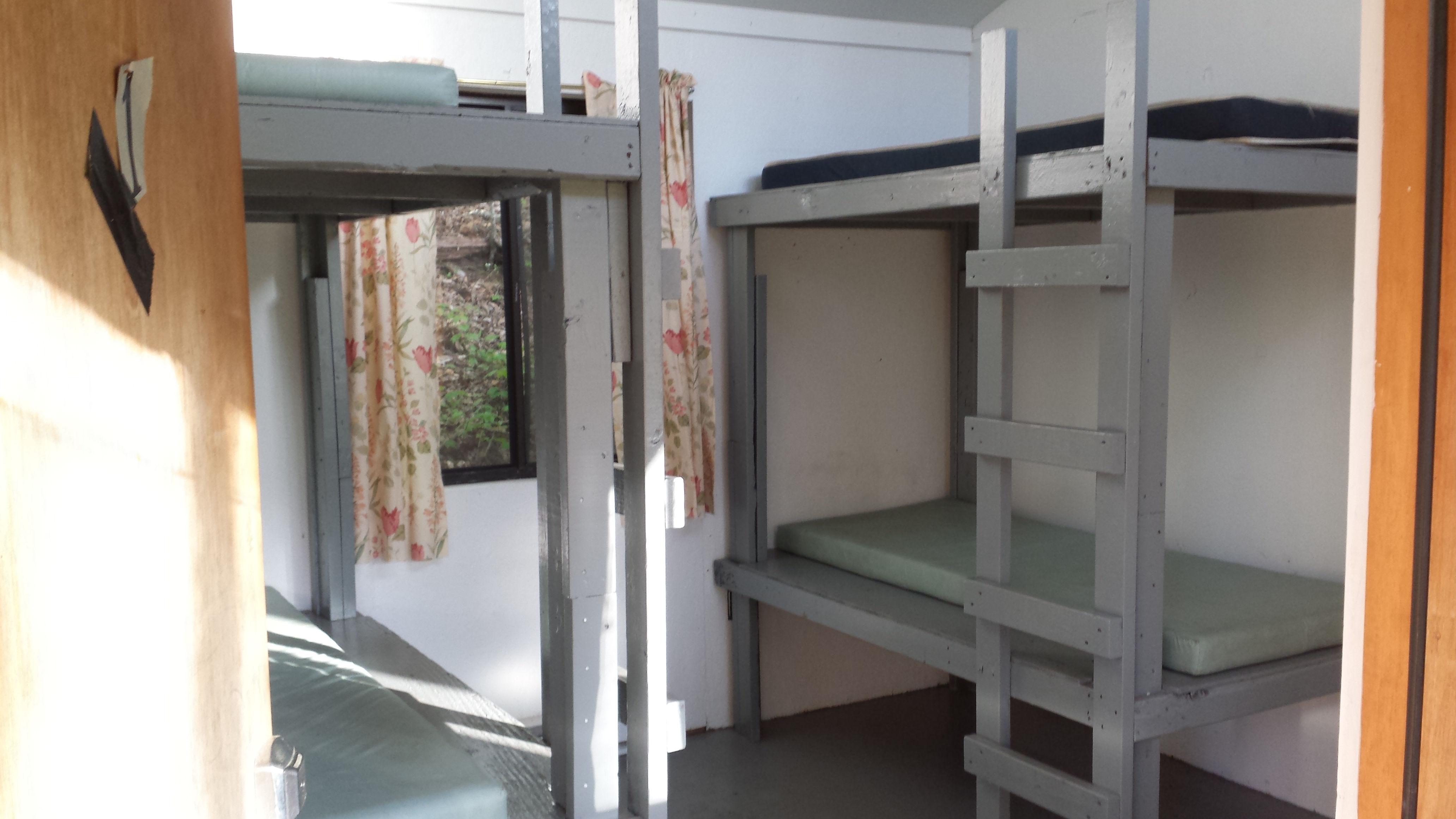
The settings, arrangements, popularity, reputation, and cost vary, as the distances from the Trail. I’ve taken photos of bunk rooms in some of the hostels I’ve stayed in so far. The first one I took was at the Nantahala Outdoor Center (universally called “NOC”), where I had this small, Spartan room to myself:
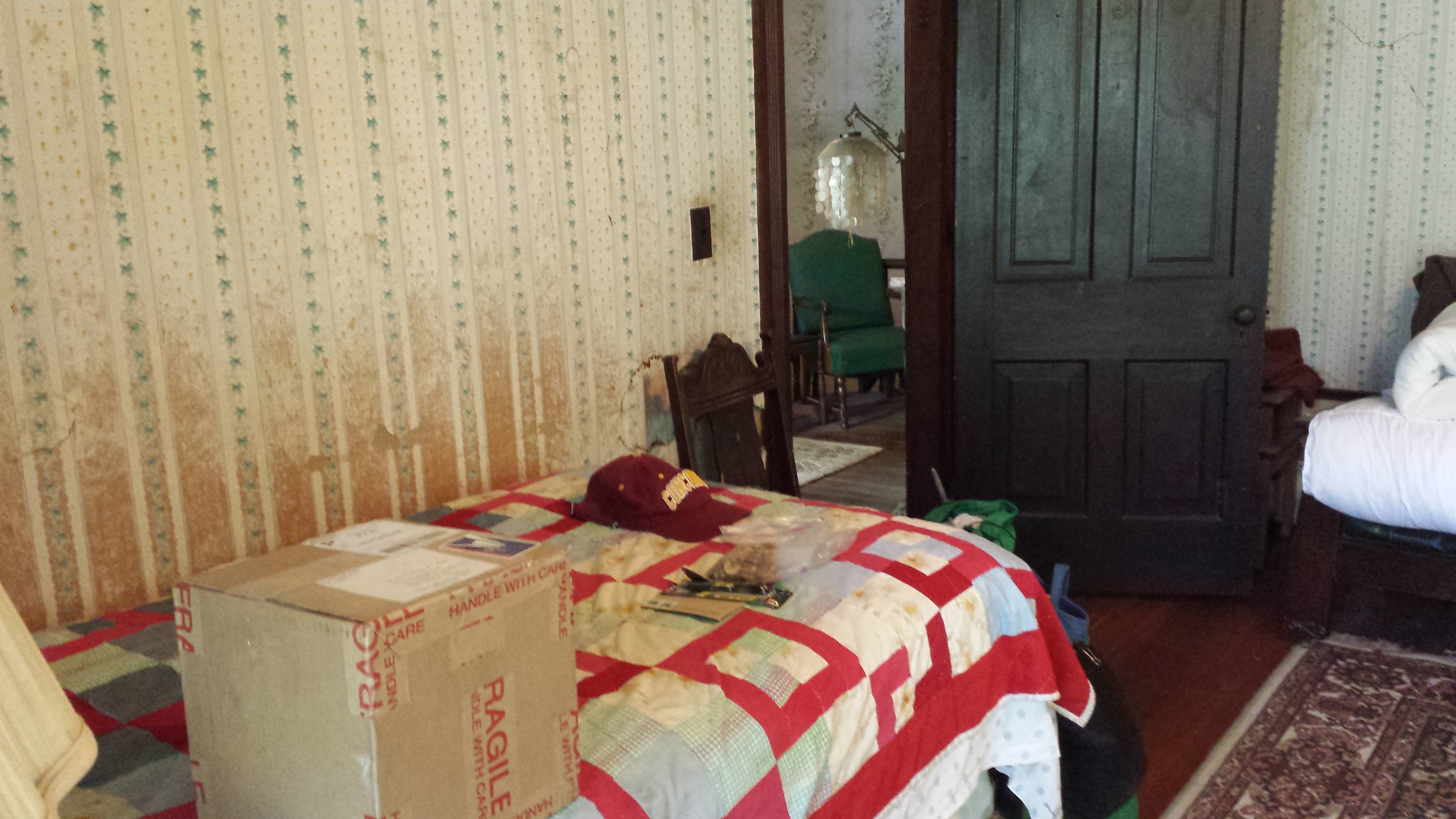
 Then there’s the Sunnybank Inn at Hot Springs, NC, a Victorian house run as a hostel and small conference center for decades, and before that as a local boarding house. Elmer, the owner, is also known for the vegetarian meals he and his staff of one prepare:
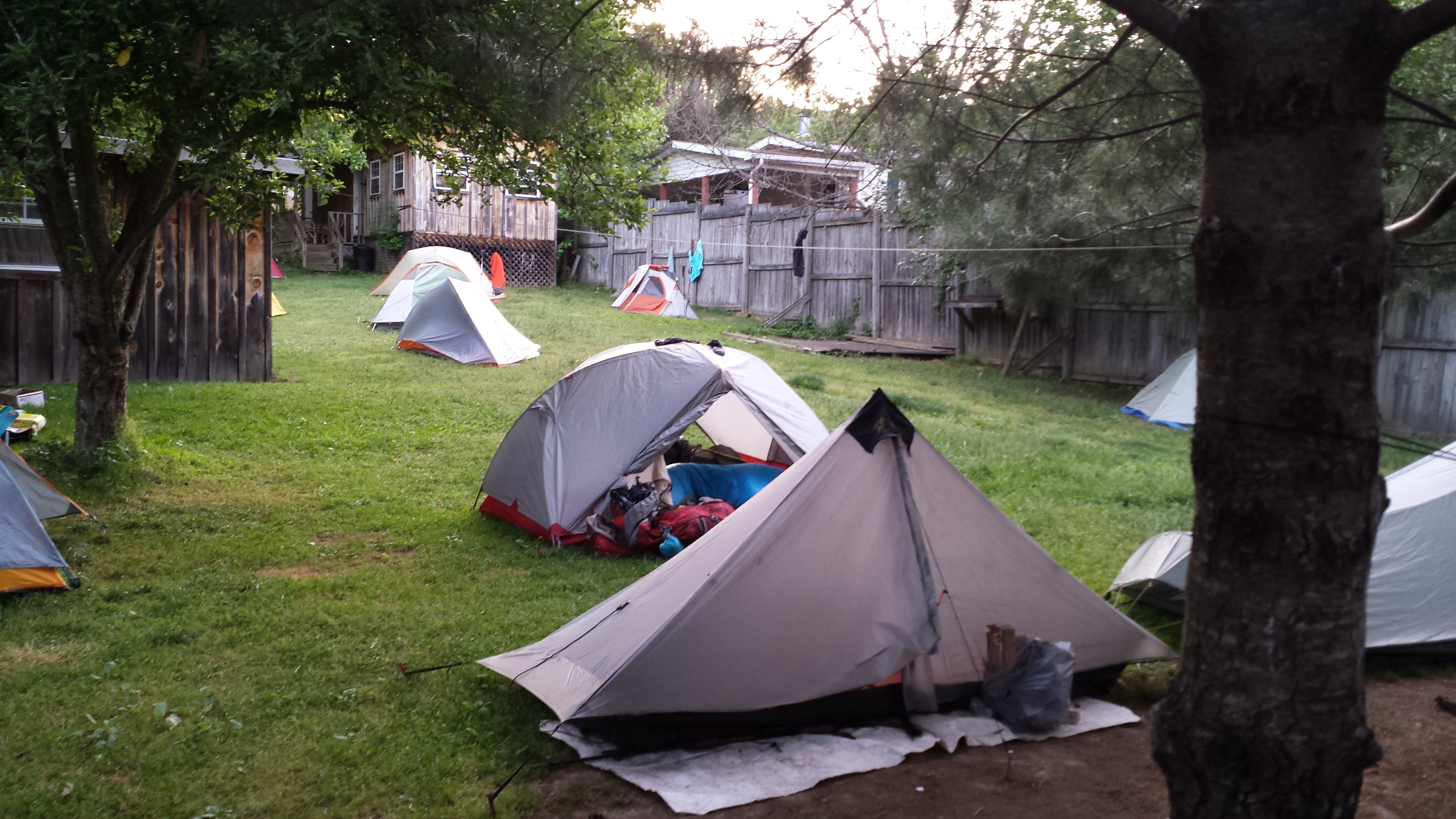
 Next is a small “tent city” out in back of the Nolichucky Hostel and Outfitters in Erwin, TN, where I found a couple pine trees from which to hang my hammock. This was a bit cheaper than paying for a room indoors, and probably just as comfortable. In this case, we were paying mostly for the amenities instead of an indoor sleeping space.
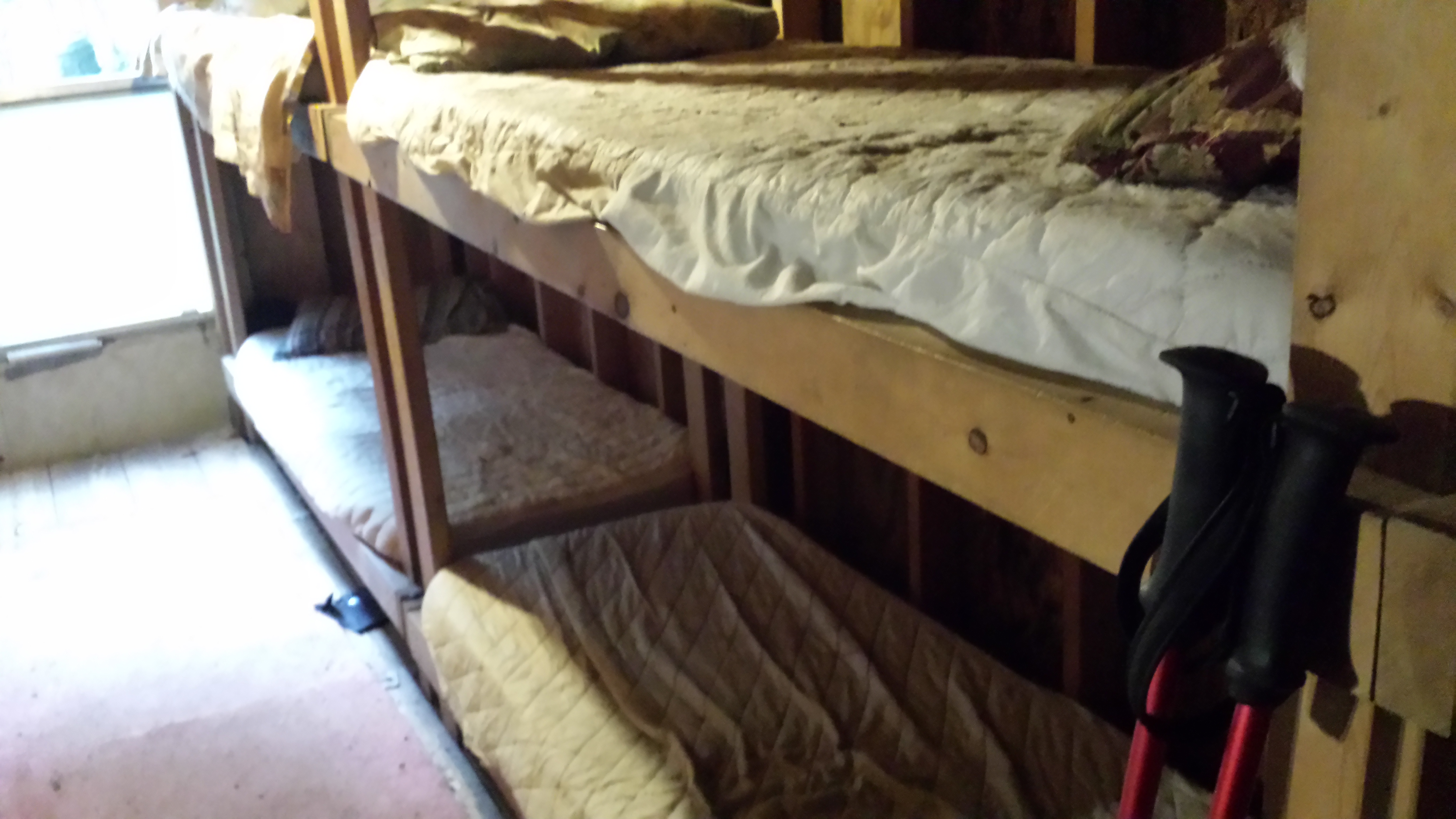
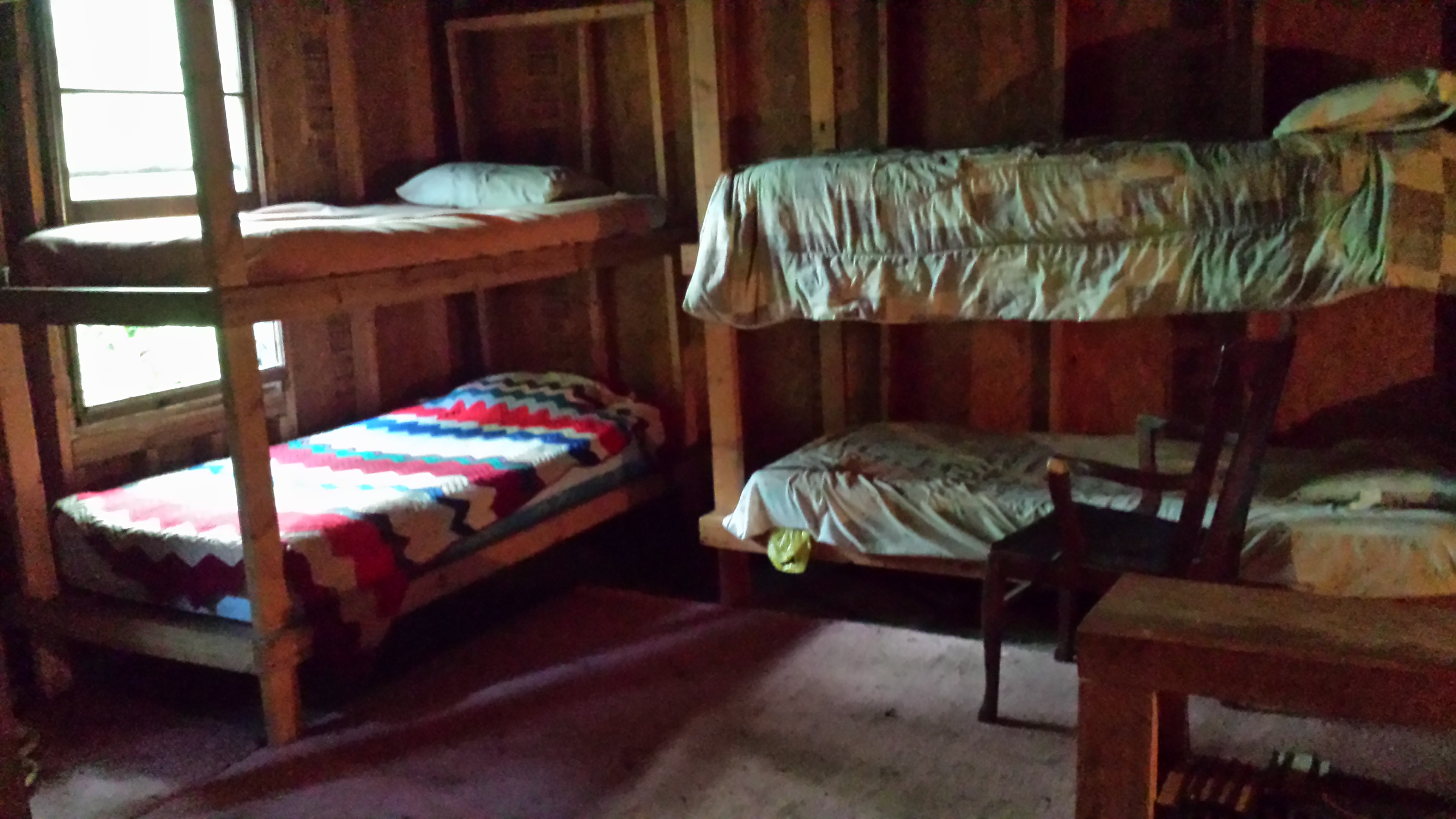
 These next two photos are from the Kincora Hostel, in a building attached to the home of Bob Peoples in Hampton, TN. The first is almost the entirety of the narrow room in which I stayed; the second is about half of the roomier upstairs bunk room. There were only 2 other hikers staying here the night I was “in residence.”
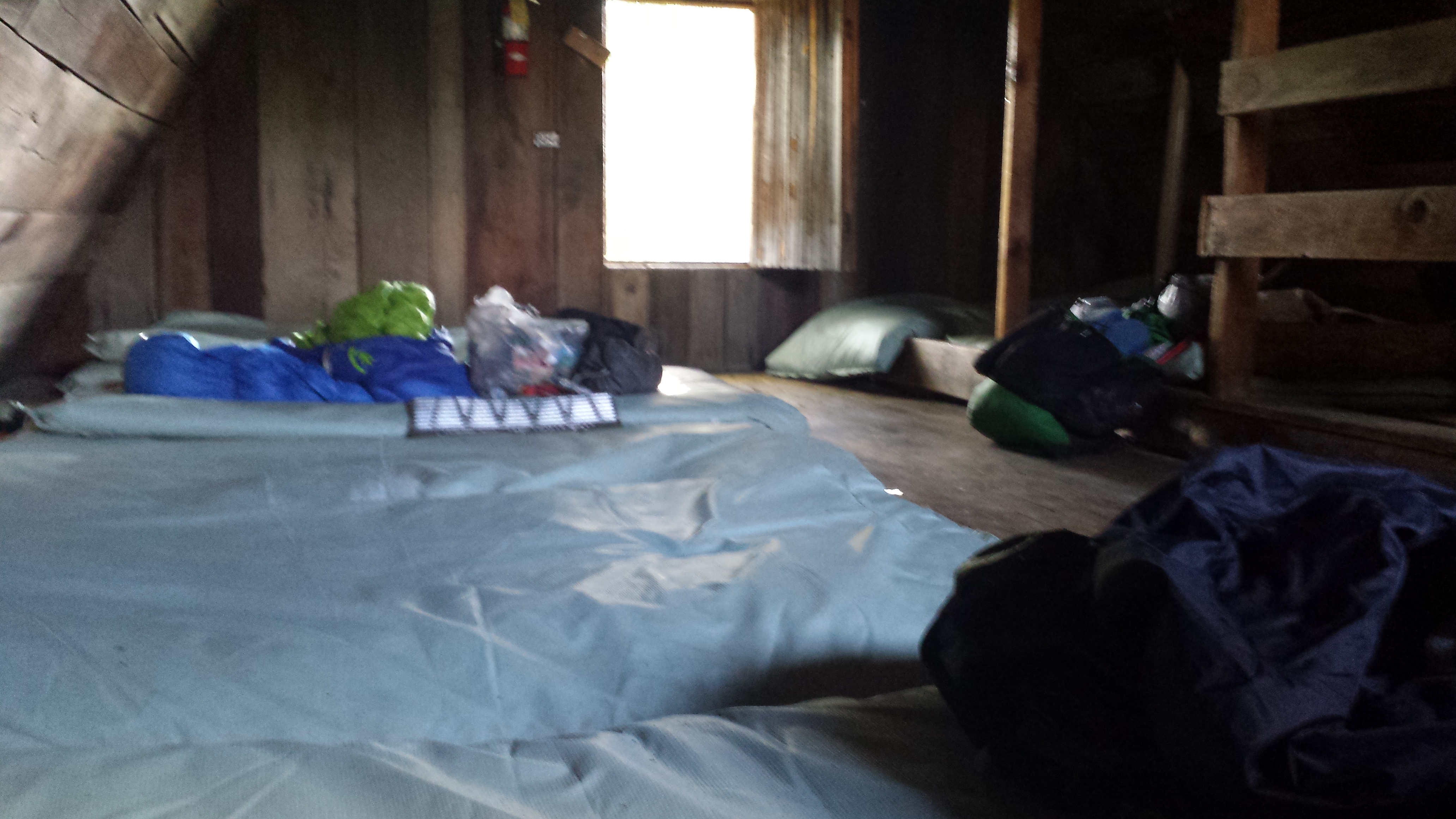
 The following photo is the sleeping loft at the Holy Family Church Hostel, in a building out behind the Holy Family Roman Catholic Church in Pearisburg, VA, nearly 3 miles off the Trail. That’s a long hike for a sleeping spot, but it was through town and I had people stop and ask me if I wanted a ride as I was walking bith to and from. It’s a simple, peaceful, well-appointed hostel (everything but a laundry) all for a ‘suggested donation’ of only 10 dollars. I slept outdoors on a mattress on the covered deck rather than up in this room.
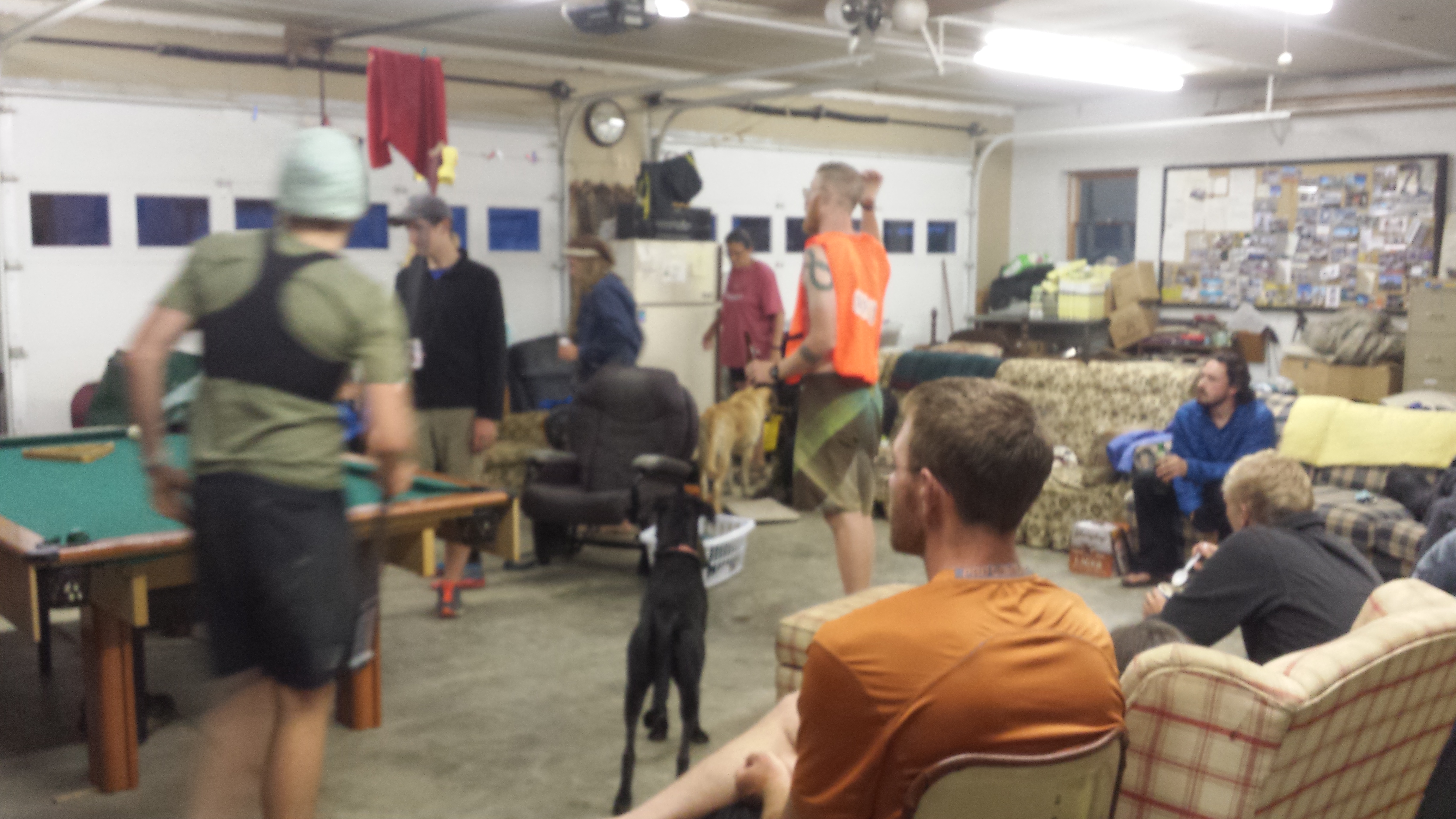
 This next one was an extremely popular hostel, the Four Pines Hostel located a short half mile off the Trail at Catawba, VA. This 3-car garage on a farm has been converted into a game room with cots spread around the margins. The night I was there, we were served complimentary baked spaghetti, had free sodas available, and lots of company. No-cost shuttles into town allowed folks to bring back copious amounts of fermented beverages. Quite the party spot. And all for the cost of a voluntary donation, no amount suggested, just whatever one wanted to pay. Or not.
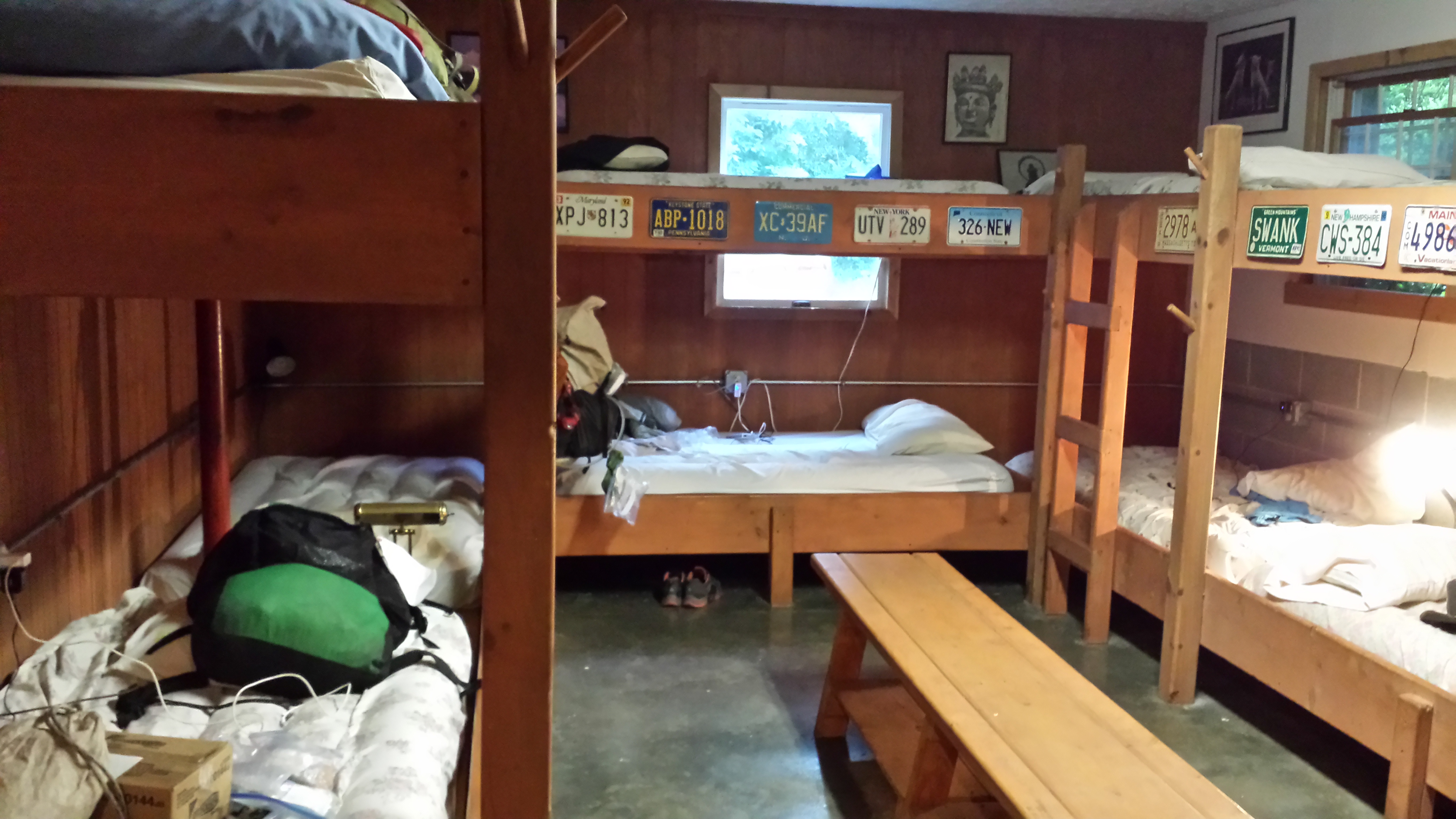
 Just outside the northern end of the Shenandoah National Park was the Front Royal Terrapin Station Hostel, run for 12 years by a former thru-hiker (and Grateful Dead fan) in the lower level of his house. Mike, the owner, happened to meet me at one of the “waysides” (snack shops) along the Skyline Drive where the Appalachian Trail crosses the parkway. Since I was planning on staying at his hostel, he offered to “slackpack” me the distance. That means he would drive my full pack to the hostel while I hiked there carrying only the barest necessities with me (water, snacks, and a jacket in case of rain) making for an easier walk. Here’s the bunk room at the Terrapin (that’s my green pack on the left):
 And, finally, a hostel I did not stay at. In northern Virginia, between the Shenandoah National Park and Harpers Ferry, WV there’s a place called Bears Den Hostel. It is in a large, lovely old stone building owned by the Appalachian Trail Conservancy (ATC) and operated by the Potomac Appalachian Trail Club (PATC). They have all the amenities available. But my schedule had me passing by in the middle of the day, so I only stopped by hoping to be able to get some ice cream. There were no staff around that I saw (the lodge, kitchen, store, and office don’t open until 5 pm), so I could only buy (on the honor system) some sodas out of the fridge in the hiker room. This bunk space is part of the hiker room there at Bears Den.
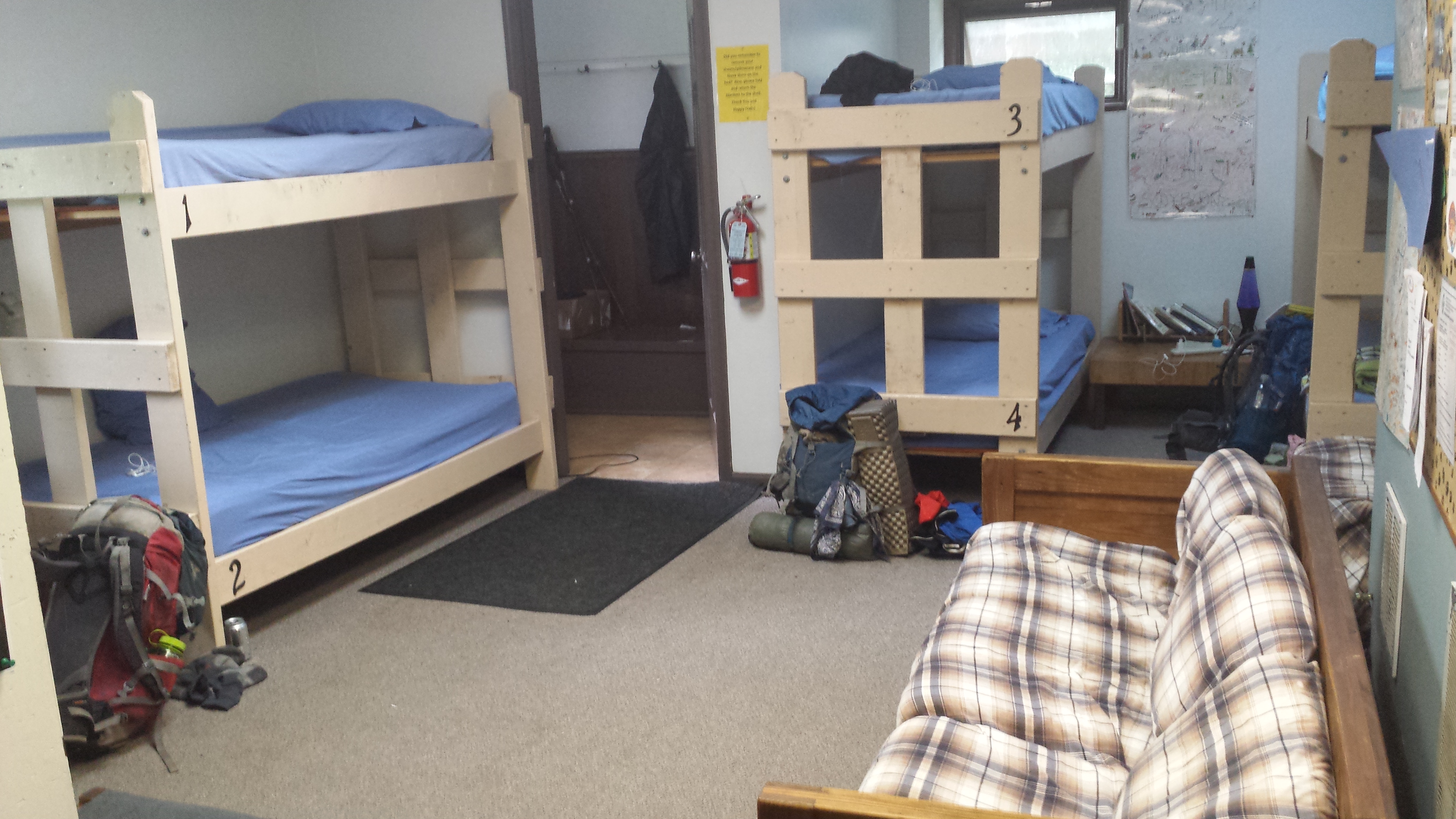 So, it isn’t all sleeping in the woods under the stars. These hostels perhaps keep some hikers from getting hostile. And they can bring to mind hostels along traditional European pilgrimage routes, say the ones run today by enterprising folks along the Camino de Santiago or even the ones run in the Middle Ages along the routes to Jerusalem.
 Pathology: the Study of a Path
Thanks for sharing all these establishments with us. Really neat!
LikeLike
Thanks Kurt, very interesting.
LikeLike